The Convenience Store Is Asia's Quietest Piece of Urban Infrastructure
The 24-hour convenience store has quietly become one of the most important pieces of urban infrastructure in Asia, and almost no city plans around it on purpose.
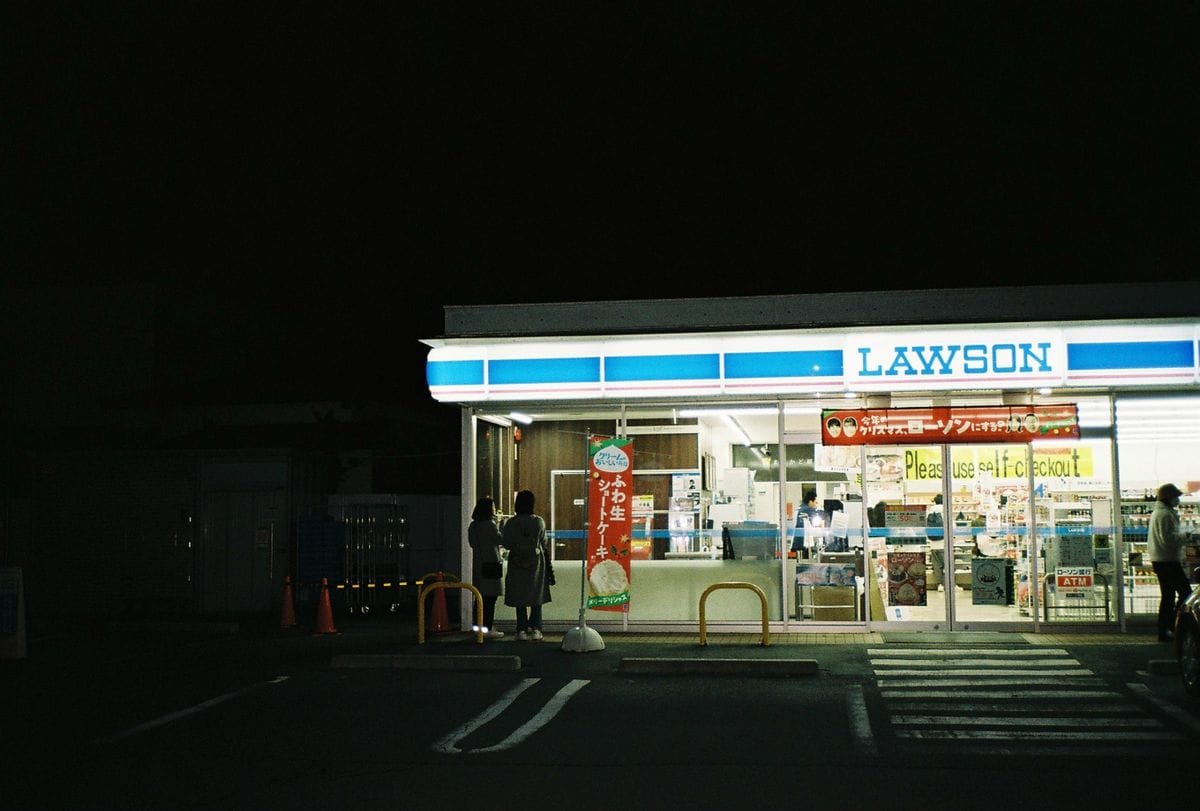
It is two in the morning in Taipei and the only light on the block comes from a 7-Eleven. Someone is paying a parking ticket at the counter. Someone else is microwaving a rice ball and reading manga off the rack. A delivery rider warms his hands on a can of coffee. None of this is remarkable to anyone who lives in East Asia — and that ordinariness is exactly the point. The convenience store has quietly become one of the most important pieces of urban infrastructure in the region, and almost nobody plans their city around it on purpose.
Why the konbini does the work a city hall won't
In Japan, the convenience store is called a konbini, and the word carries more weight than its English root suggests. A FamilyMart or a Lawson is not just a shop. You can pay your electricity bill there, collect a parcel, buy concert tickets, withdraw cash, photocopy a document, drop off dry cleaning in some branches, and pick up a surprisingly decent hot meal for around 500 to 700 yen. In a country where many older residents do not bank online, the konbini counter is the interface between a person and the bureaucracy.
Taiwan took the same model and pushed it further. The density is extraordinary — roughly one convenience store for every two thousand people, the highest concentration on earth — and the machines inside them, the ibon kiosks at 7-Eleven and their FamilyMart equivalents, handle government paperwork, train bookings, and tax payments. When a typhoon is coming, the convenience store is where people stock up, and it is also where the local news is glued to the screen behind the till.
The hidden safety function nobody markets
Here is the part that rarely makes it into the glossy city-branding brochures: a 24-hour convenience store is a lit, staffed, predictable space at every hour of the night. For a woman walking home alone, for a teenager who missed the last train, for a shift worker finishing at four, that matters more than any safety campaign. The store doesn't advertise this. It simply stays open, and the staying-open does the work.
This is why the convenience store deserves to be read as infrastructure rather than retail. A bus stop without a bus is useless. A convenience store at 3am is, all by itself, a small piece of functioning public life — a phone charger, a toilet, a clerk who will call someone if you are clearly unwell.
What it costs the people behind the counter
None of this is free, and it is worth being honest about who pays. The 24-hour model in Japan has been under real strain. Franchise owners, many of them family operations, have pushed back hard against the requirement to stay open around the clock, citing a labour shortage and exhaustion. Several major chains have, after years of resistance, allowed some branches to close overnight. The infrastructure, in other words, runs on the backs of underpaid clerks and stretched owners, and that is not a sustainable foundation forever.
The convenience the customer enjoys is subsidised by long hours that increasingly few people want to work. If you have ever wondered why the same chain feels slicker in Tokyo than in a struggling regional town, this is usually why — the rural branch can no longer staff the graveyard shift.
What this means if you actually live there
For anyone settling into an Asian city, the practical advice is unglamorous but real. Learn what your nearest konbini can do before you hunt down a bank — in Japan and Taiwan, it can probably do more, faster, with shorter queues. Keep small cash for the machines that still prefer it. And if you are choosing between two apartments, the one a ninety-second walk from a 24-hour FamilyMart is, genuinely, the better-connected home, whatever the listing says about transit links.
Singapore and South Korea run the model differently — 7-Eleven and CU and GS25 in Seoul lean harder on fresh food and less on bill payment — so the texture changes from city to city. The constant is the light in the window. Walk any East Asian neighbourhood after midnight and trace the route between the glowing storefronts. That, more than the metro map, is the city that never quite goes to sleep.