The Covered Walkway Season: How Singapore, Taipei and Bangkok Built Cities You Can Cross in the Rain
As the June rains settle over Southeast Asia, the covered walkway quietly becomes the most important piece of infrastructure in the city.
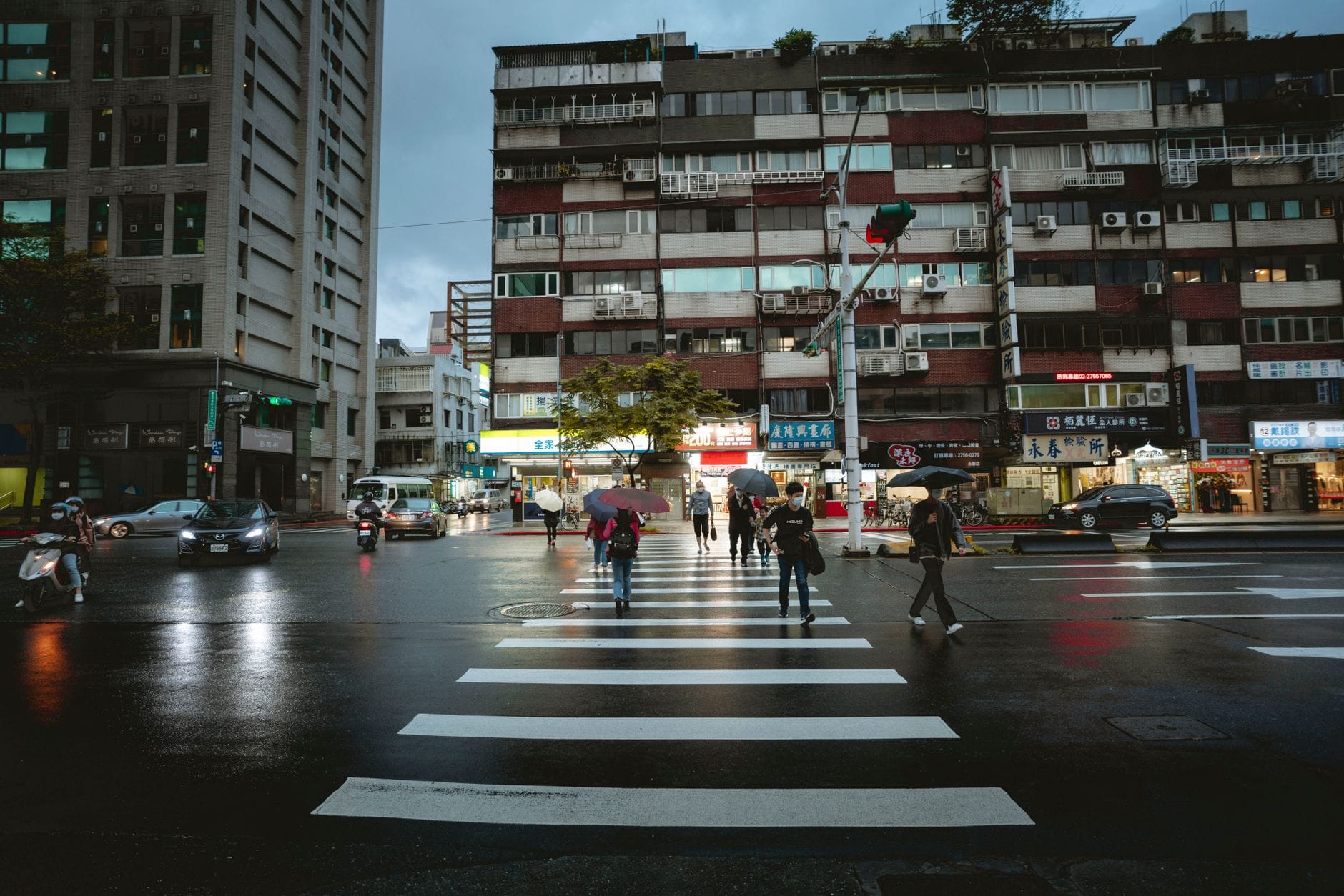
The rain arrives in the afternoon now, on schedule, the way it does every June across the lower half of Asia. In a badly designed city this would empty the streets. In Singapore, Taipei and parts of Bangkok, it barely registers. People keep walking, dry, under a continuous ribbon of roof that most of them have stopped noticing.
This is the covered walkway, and during the monsoon months it does more work than any train line. It is also one of the oldest pieces of urban design still earning its keep.
The five-foot way, two centuries on
Singapore's version traces back to the colonial-era shophouse rule that required a covered public passage, roughly five feet wide, along the building front. The point was shade and shelter, and the rule produced kilometres of continuous, weatherproof pavement before anyone called it planning. Walk Chinatown or Joo Chiat today and you are still using it.
Taipei built its own dense network of arcades, the qilou, for the same reasons: heat for half the year, heavy rain for the rest. The result is a city where you can cross several blocks in a downpour and arrive with dry shoes, ducking only briefly at the gaps where the rhythm breaks.
Why the gaps are the real story
Spend a wet week walking and you learn the city by its discontinuities. The covered stretch ends at a newer building that ignored the old setback, and suddenly everyone bunches up, waiting under an awning that was never meant to be a bus stop. Continuity, it turns out, is the whole product. A walkway that protects you for 90 percent of a journey and abandons you at the worst crossing has failed in a way a fully exposed street has not, because it taught you to expect shelter and then removed it.
Bangkok shows both faces. The skywalks threaded out from the BTS stations are a modern answer to the same problem, lifting pedestrians above the flooded gutter entirely. Step off them into an older soi and you are back to negotiating the rain against parked motorbikes.
Infrastructure you only see when it stops
The covered walkway is invisible the way good infrastructure usually is. Nobody photographs it. It appears in no tourism campaign. But it is the reason the rainy season in these cities is an inconvenience rather than a shutdown, the reason the night market still fills up when the sky opens, the reason a vendor can keep a stall going through a storm that would close an open plaza.
There is a quiet lesson in it for the newer towers going up across the region, the ones that meet the street with a blank lobby and a security desk. The shophouse builders of two centuries ago understood something their successors keep forgetting: in a climate like this, the most generous thing a building can offer the city is a dry place to keep walking.